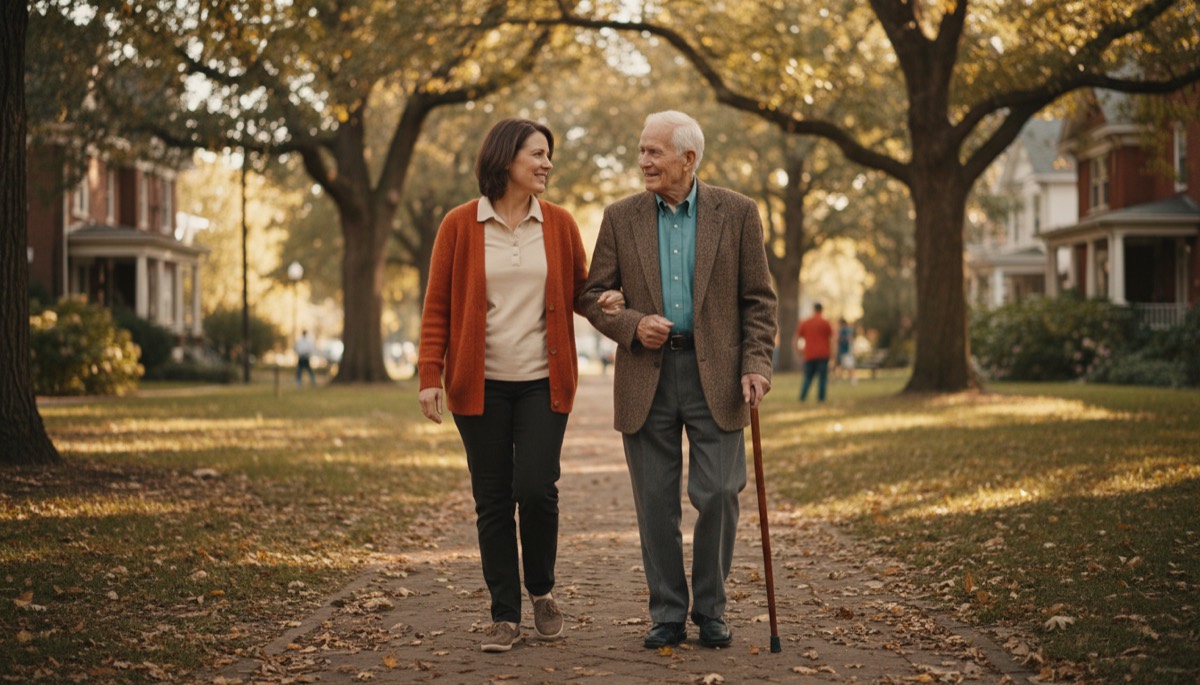
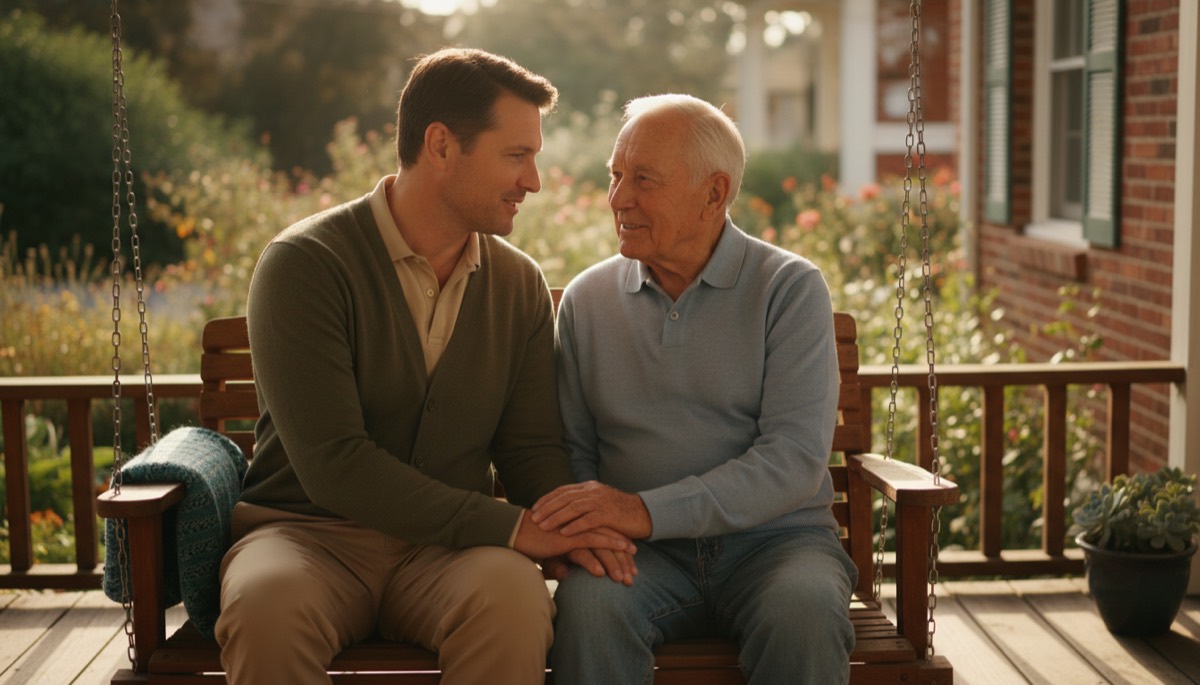
Adult children rehearse this conversation for weeks and it still goes badly, usually within about ninety seconds. That is not because they did it clumsily. It is because the two people in the room are having different conversations.
You have come to talk about safety, and about the fact that you are frightened. What they hear, from the first sentence, is the beginning of the process by which they stop deciding things. They have watched this happen to friends. They know how it ends. So they say they are fine, and the conversation is over.
Why the usual approach fails
Three habits do most of the damage, and all three come from good intentions.
- Arriving with a decision. Two siblings who have already agreed the plan on the phone, presenting it together, is an ambush however gently it is delivered. The content might be right. The form guarantees resistance.
- Leading with the evidence. The list of everything you have noticed is a case for the prosecution. Even when every item is true, and especially when every item is true, it produces defense rather than agreement.
- Using the word care. To you it means help. To somebody of that generation it can mean a home, a decline, being handled. The word is doing damage before the sentence finishes.
The common thread is control. Everything that works gives some of it back, and everything that fails takes more of it away.
You are not having the same conversation. You are talking about safety. They are hearing the beginning of losing the house, the car and the say in their own day.
What to do instead
Pick the moment, and it is not a moment of crisis
Not straight after a fall, not in a hospital corridor, not at Christmas dinner with everyone there. A quiet weekday, unhurried, one to one, ideally while doing something ordinary together. Conversations that are hard to have face to face are considerably easier side by side, which is why so many of these actually happen in a car or a kitchen.
Send one person
The person with the best relationship, not the one with the strongest opinion and not the one who lives nearest. Everybody else waits. A family meeting has its place much later, when there is something concrete to discuss.
Open with a question and mean it
Not a rhetorical one. Something like: what is getting harder than it used to be? Or: if you could hand one job to somebody else tomorrow, which would it be? Then stop talking. The silence will be uncomfortable and you should let it run. People very often answer honestly if the question is genuine and nobody fills the gap.
Aim at one specific job, not at a service
The proposal that gets accepted is small, concrete and unrelated to the body. Somebody to do the heavy cleaning. Somebody to drive to the appointments so you do not have to take a day off. Somebody to do the shopping. These are conveniences rather than concessions, which is precisely why they work.
Personal help, meaning bathing and dressing, is almost never the right opening ask. It is the hardest thing to accept from a stranger and much easier to accept from a person who has been coming for four months to do the shopping.
Frame it as their staff, not their supervision
The framing that lands is not somebody to look after you. It is somebody to take the jobs you have got better things to do than. Let them interview the person. Let them decide the days. Let them say no to a caregiver they do not warm to and have that respected. Every one of those is control handed back and every one of them makes the arrangement more likely to survive.
Ask for a trial, not a decision
Four weeks and then we talk about it again. Very few people will refuse a reversible experiment, and the vast majority of trials become arrangements, because the objection was almost never about the help itself.
The four answers you will get, and what is underneath them
"I do not need it"
Usually true from where they are sitting and beside the point. Do not argue with the assessment, which cannot be won. Move the frame instead: I know, this is much more for me than for you, it would stop me worrying on the drive home. Asking a parent for a favor is a different transaction from offering them help, and it is one they have fifty years of practice at accepting.
"I cannot afford it"
Sometimes real, often a socially acceptable no. Test it by getting specific: if it were four hours a week and cost this much, would you want it? If the answer is still no, money was not the objection. If the answer is yes, the problem is solvable, and there are more routes than people realize, including Medi-Cal's IHSS program and VA benefits, all of which are set out in the payment guide.
"I do not want a stranger in my house"
The most legitimate objection on the list and the one to take most seriously. It is answered with specifics rather than reassurance: the same person every time, you meet them first, you can say no, it is two hours on a Tuesday, and it stops whenever you want. Every one of those answers shrinks the stranger.
"I will think about it"
Which usually means no, and pressing it converts a maybe into a firm refusal. The move is to leave it and come back in a couple of weeks with something smaller than you asked for last time. Repetition works on this. Pressure does not.
An adult who has capacity is entitled to make decisions you think are unwise. That is uncomfortable and it is also the actual position.
If they say no and you are genuinely worried
An adult who has capacity is entitled to make decisions you think are unwise. That is uncomfortable and it is also the actual legal and moral position, and families who try to override it usually lose the relationship and the argument at once.
What you can do is narrow the gap. Fix the environment even if the help is refused: the lighting, the loose rugs, the grab rail, the smoke alarm. Get the doctor involved, because advice from a clinician often lands where advice from a daughter does not. Keep visiting. Ask again in a month with a smaller ask. And know the line: if somebody is genuinely at risk and no longer able to weigh the decision, that is a different situation with different routes, and a doctor is the first call.
One more thing, and it is the thing people regret
Ask them what they want to happen if things get worse. Not as a negotiation, as a genuine question, while it is still hypothetical and they can answer it clearly. Where they would want to be. What they would refuse. Who they would want deciding.
Families who have had that conversation make the later decisions with far less guilt, because they are carrying out somebody's wishes instead of guessing at them. Families who have not are the ones still arguing about it in a hospital corridor at two in the morning.
Where these numbers come from
Every figure on this page was read off one of these sources. Where a figure is our own arithmetic on a published rate, the table says so.
- CareScout Cost of Care Survey 2025The cost figures this page refers to when the affordability objection comes up. Data collected July through November 2025, published March 2026.
https://www.carescout.com/cost-of-care - California Department of Social Services, In-Home Supportive ServicesThe program referred to under the affordability objection, covered properly in the payment guide. Verified August 11, 2026.
https://www.cdss.ca.gov/in-home-supportive-services