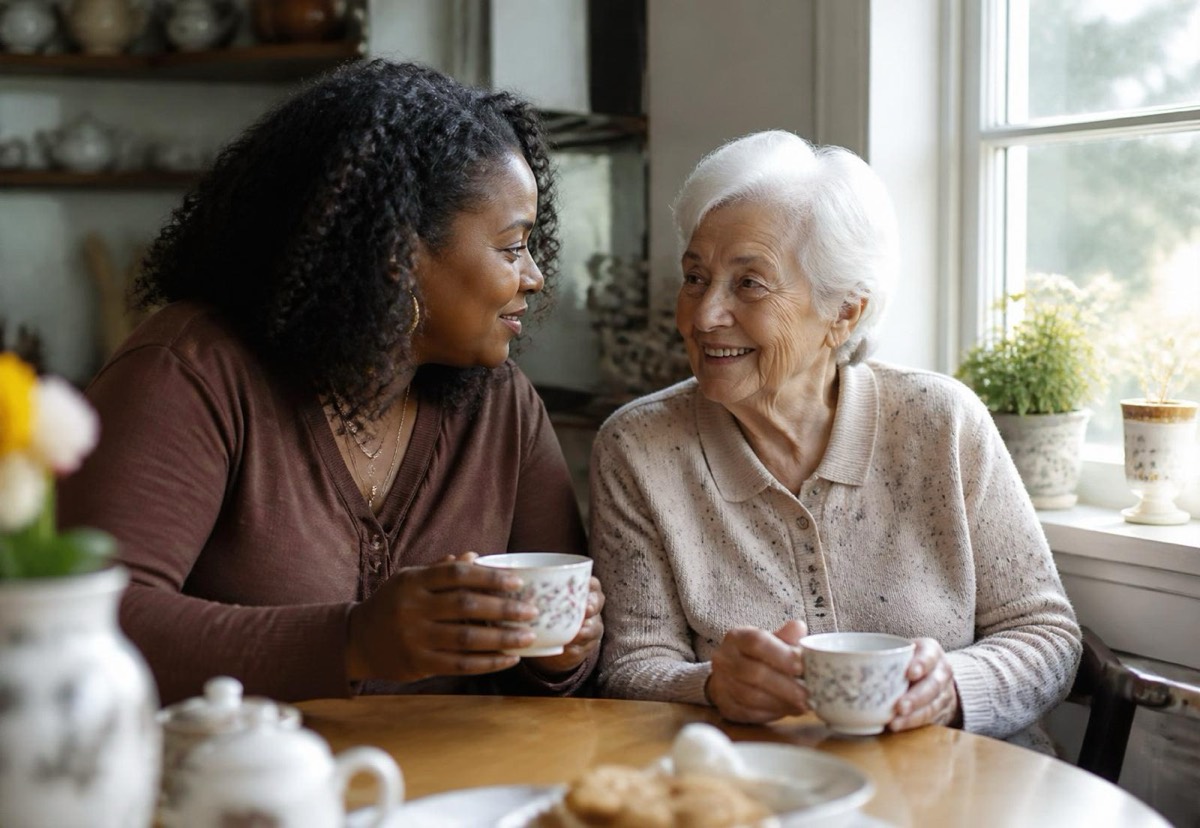
Companion care is the service families feel most self-conscious about buying. Help with bathing is obviously necessary. Paying somebody to sit with your mother and talk to her feels, to a lot of people, like an admission that the family has failed. So it gets postponed, and it is usually the thing that would have helped most.
It is worth knowing that the health research does not treat this as a soft problem at all.
What the evidence actually says
The National Institute on Aging, part of the National Institutes of Health, puts it plainly:
People who are socially isolated or lonely are more likely to be admitted to the emergency room or to a nursing home.
It lists conditions that isolation and loneliness are associated with higher risk of: high blood pressure, heart disease, obesity, weakened immune function, anxiety, depression, cognitive decline, dementia including Alzheimer's disease, and death. On brain health specifically:
Social isolation and loneliness may also be bad for brain health. These have been linked to poorer cognitive function and higher risk for dementia, including Alzheimer's disease.
Why older people specifically
Not because of anything about age itself. Because of what tends to happen around it, which NIA sets out directly:
Older adults are at higher risk for social isolation and loneliness due to changes in health and social connections that can come with growing older, hearing, vision, and memory loss, disability, trouble getting around, and/or the loss of family and friends.
Read the full risk list and what stands out is how ordinary most of it is: loss of mobility, vision or hearing problems, feeling a lack of purpose, financial worry, living alone, no transport, being unable to leave the house without help, a bereavement or retirement, separation from family, caring for somebody else who is unwell. Almost none of those are psychological in origin. Most of them are logistics.
Which is the useful part, because logistics can be changed and temperament cannot. A woman who has stopped going to church because she stopped driving is not lonely for a mysterious reason. She is lonely because nobody takes her.
The hearing one is worth its own paragraph
NIA notes that people with hearing loss may find conversation hard, and may become withdrawn because they are frustrated or embarrassed about not understanding what is being said. It also notes that older adults are sometimes mistakenly thought to be confused when the real problem is that they cannot hear the question.
That misreading has consequences well past the conversation. Somebody assumed to be confused gets spoken about rather than to, gets fewer choices, gets visited less. If one thing on this page is worth acting on this month, it is a hearing test and working hearing aids.
She is not lonely for a mysterious reason. She is lonely because nobody takes her.
What companionship looks like when it works
The word makes it sound like sitting in a chair making conversation, and the version that helps is almost never that. It is an activity with a person attached. Company is the by-product of doing something, which is true at twenty-eight and stays true at eighty-eight.
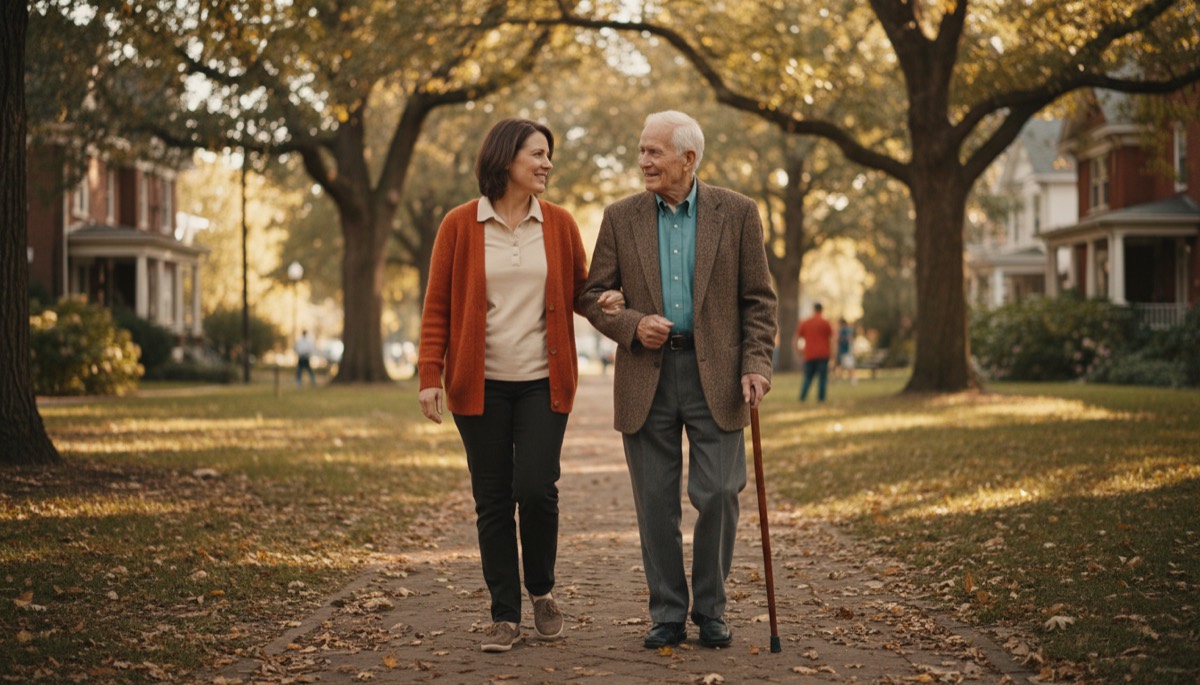
- Getting out of the house. The shop, the library, the garden center, the same cafe every Thursday. Somewhere with other people in it.
- The thing they used to do. Cards, the crossword, baking, the garden, sorting forty years of photographs into some kind of order.
- The appointments. Someone who drives, waits, and remembers what the doctor said, which is worth as much as the ride.
- The phone calls and the letters. A surprising amount of isolation is administrative: the grandchild who would call more if somebody set it up.
- The meal eaten with somebody. People living alone stop cooking properly long before they stop being able to.
- Somebody who notices. That the mail has piled up, that the same sweater has been on for four days, that the fridge is emptier or fuller than it should be.
That last one is the part families do not price in. The person who comes twice a week is the early warning system for everything else, and they are usually the first to spot the thing that would otherwise have been found at the point of crisis.
What families can do without hiring anyone
- Fix the transport problem first. More isolation is caused by a surrendered driver's license than by anything anyone feels.
- Book the hearing test. Then check the aids are actually being worn and have working batteries, which is a different question.
- Make the contact predictable rather than frequent. A call every Sunday at six that always happens beats four spontaneous calls a week that mostly do not.
- Find one thing outside the house each week and defend it. A single fixed commitment structures a whole week around it.
- Ask directly. Not whether they are lonely, which nobody answers honestly, but who they last had a proper conversation with, and when.
If those are already in place and it is still not enough, that is the point at which paid companionship stops being an admission of failure and starts being the obvious answer. It is also, at a few hours a week, the least expensive thing on the whole menu.
Where to get help that is not us
The Eldercare Locator, named on the NIA page as its own referral route, connects families to local support for older adults, and can be reached on 800-677-1116. It is free and it is not selling anything.
Where these numbers come from
Every figure on this page was read off one of these sources. Where a figure is our own arithmetic on a published rate, the table says so.
- National Institute on Aging, loneliness and social isolationThe health associations, the risk factors, the hearing loss point and the Eldercare Locator referral. No publication date printed, verified August 11, 2026.
https://www.nia.nih.gov/health/loneliness-and-social-isolation/loneliness-and-social-isolation-tips-staying-connected - Alzheimer's Association, Alzheimer's Disease Facts and FiguresContext on dementia prevalence where this page touches cognitive decline. Verified August 11, 2026.
https://www.alz.org/alzheimers-dementia/facts-figures